 |
   |
|
|
Tips to Make Sure Your VpCI® Is Working
Cortec® Vapor phase Corrosion Inhibitors (VCI / VpCI®) are a comprehensive answer to many of the world’s toughest industrial preservation problems. Their versatility and effectiveness for treating hard-to-reach areas have earned them a place in large-scale oil and gas construction and preservation projects around the world. But what if the unexpected happens and the VpCI® goes missing? Corrosion monitoring works on the assumption that you have chosen a sound preservation plan to start with. Whether you are laying up an entire yard of pipeline segments or one boiler, keeping assets corrosion free and ready for action saves both time and money in the long run. Protection does not have to be complicated; it is as simple as filling the void space with Vapor phase Corrosion Inhibitors and making sure all openings are closed so the chemistry stays trapped inside to do its job. One application example would be fogging pipeline segments with CorroLogic® Fogging Fluid VpCI®-339 or VpCI®-337 and capping the ends with VpCI®-126 HP UV Shrink Film, MilCorr® VpCI® Shrink Film, or another effective closure system. As long as the proper dose and application methods are used, the voids should remain well protected with little product removal required when the assets are placed into service. Finish Strong with Corrosion Monitoring “If the void has been properly fogged and sealed, what you should find is a corrosion-free metal coupon. However, if the coupon is corroded, there is a problem that needs to be investigated further,” explained Eric Uutala. “Sometimes the solution is just to fog additional product inside. Other time, it may be necessary to fix a failed end seal on the system. Once the source of the problem is pinpointed, workers can address it and renew the VpCI® protection accordingly.” Your Ticket to Peace of Mind
|
|
|||
© InfraStructures - Tous droits réservés - All rights reserved |

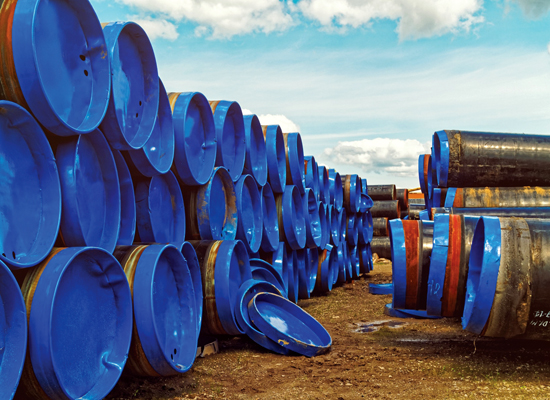 The method of corrosion monitoring itself is incredibly easy and inexpensive compared with the benefits. For instance, rather than sending a costly borescope or fiberscope down the length of a pipeline segment to inspect it for corrosion, Uutala recommended using corrosion coupons. When working with pipelines, Uutala noted that hanging one corrosion coupon in every 10 pipeline segments could provide representative data on the overall preservation status. At inspection time, instead of opening thousands of pipe segments, this would only require opening a percentage of them to get an idea of the bigger corrosion picture.
 Partagez sur Facebook / Share on Facebook


