 |
   |
|
|
Attachment Strategy for Skid Steer Loaders: How Precision Tools Enable Diversified Paving Work
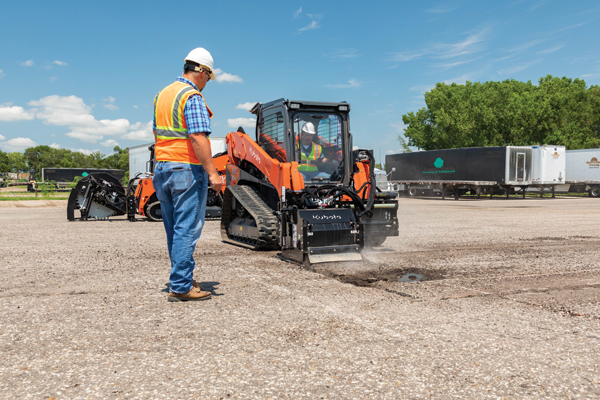
Paving contractors operate in a diverse market. Success requires the ability to pivot quickly between applications, such as residential driveway prep, municipal road resurfacing, utility trenching, and urban development site work, while maintaining quality and margin. Business-savvy contractors deploy compact track loaders and skid steer loaders equipped with precision attachments purpose-built for specific paving applications to ensure both operational efficiency and revenue strategy. Each attachment enables the core machine to excel at specialized tasks while maintaining consistent performance across project types. This allows for faster project transitions, improved work quality, and the ability to pursue diverse revenue streams throughout the year. Residential Precision Work: Driveways, Sidewalks, and Fine Grading Choosing the right bucket is important for material handling, grading or placing material where required for maximum productivity. Box blade attachments equipped with laser-guided grading systems enable operators to achieve required grade without requiring another person to check or having to get out yourself. Laser-guided equipment takes the guess work out and improves efficiencies on the jobsite. Rather than mobilizing a full-size motor grader for residential site prep, contractors can maneuver a compact track loader around housing developments, preparing roads and driveways to exact specifications with the appropriate grading system. Cold planer attachments excel at sidewalk and driveway milling, removing damaged asphalt surfaces to precise depths, levelling uneven pavement, and creating textured surfaces ready for overlay or repair. Operators can work around utility access points, curbs, and adjacent structures without the scale and impact of larger equipment. Municipal Road Resurfacing: Efficiency at Scale There are various attachments that can be used with a compact track loader or skid steer to help with road resurfacing. Buckets are required to remove and add material. Hopper brooms are used to keep the area clean and dust down making it a safer environment for the workers and residents in the area. Breaker attachments remove damaged pavement sections without tearing up entire road structures, allowing targeted repair rather than complete reconstruction. Utility Trench Work: Breaking Through Hard Surfaces Breaker attachments (hydraulic hammers powered by the compact track loaders, skid steer loaders or excavators) break concrete and asphalt efficiently into manageable pieces. Sizing depends on the power unit, as larger machines with higher flow capacity and weight capacity can handle breakers with greater impact force and higher impact rates, enabling faster demolition. Smaller breakers suit residential-scale utility work, maintaining productivity while fitting within space constraints. Once pavement and surface material are broken, bucket attachments remove debris, enabling crews to work quickly without manual labor in high-risk environments. Curated Attachments as Strategic Asset Quick-connect systems allow operators to swap attachments rapidly, eliminating downtime between applications. The operator who masters one machine and understands attachment capabilities drive safer and more efficient workflows. |
|
|||
© InfraStructures - Tous droits réservés - All rights reserved |
 Partagez sur Facebook / Share on Facebook


